2D Anti-Scatter Grids
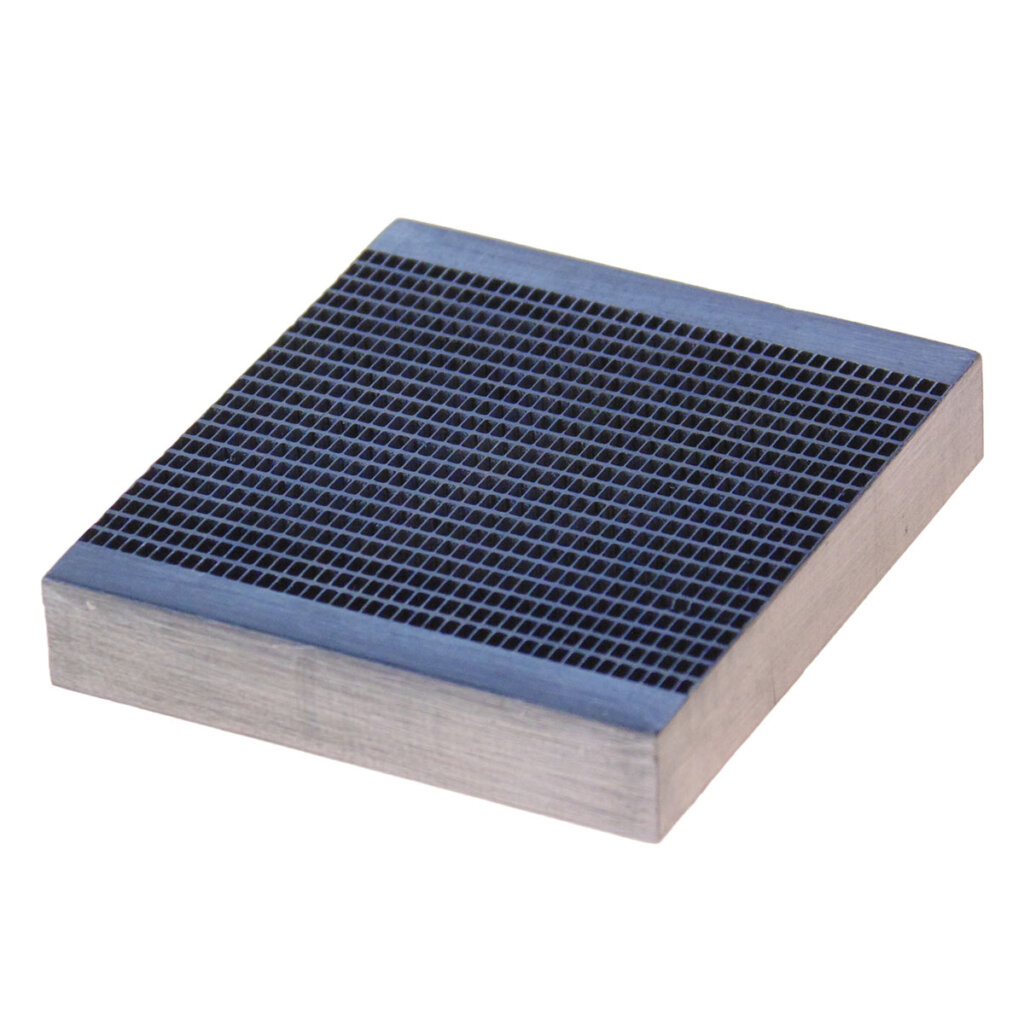
Crossed two-dimensional anti-scatter grids for maximum scatter rejection in thick-body imaging. Perpendicular septa arrays eliminate scatter from all directions. CT and CBCT applications.
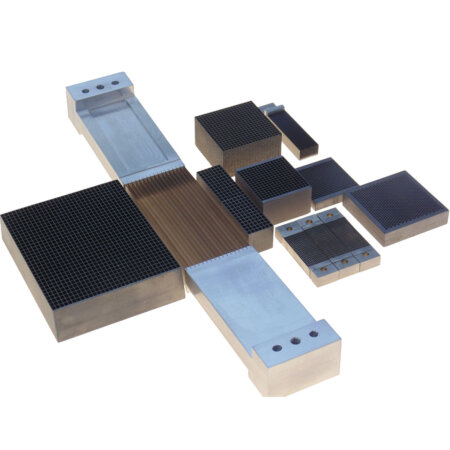
Crossed grids, also called 2D grids or criss-cross grids, employ two perpendicular arrays of radiopaque septa, creating a cellular structure that rejects scattered radiation from all directions. This geometry provides superior scatter cleanup compared to linear grids, making crossed grids the optimal choice for thick-body imaging and CT applications where scatter severely degrades image quality.
Complete angular scatter rejection
Linear grids reject scatter perpendicular to the septa orientation but allow scattered photons traveling parallel to the strips to reach the detector. Crossed grids eliminate this directional limitation by adding a second set of septa at 90°, blocking scatter regardless of its direction of travel. The improvement is particularly significant for:
- Thick anatomy: Abdomen, pelvis, lateral lumbar spine where scatter-to-primary ratios exceed 4:1
- Large field sizes: Imaging areas where scatter originates from a wide tissue volume
- Cone-beam CT: Where scatter causes cupping artifacts and reduces CT number accuracy
- High-energy applications: Industrial and security imaging at energies above diagnostic range
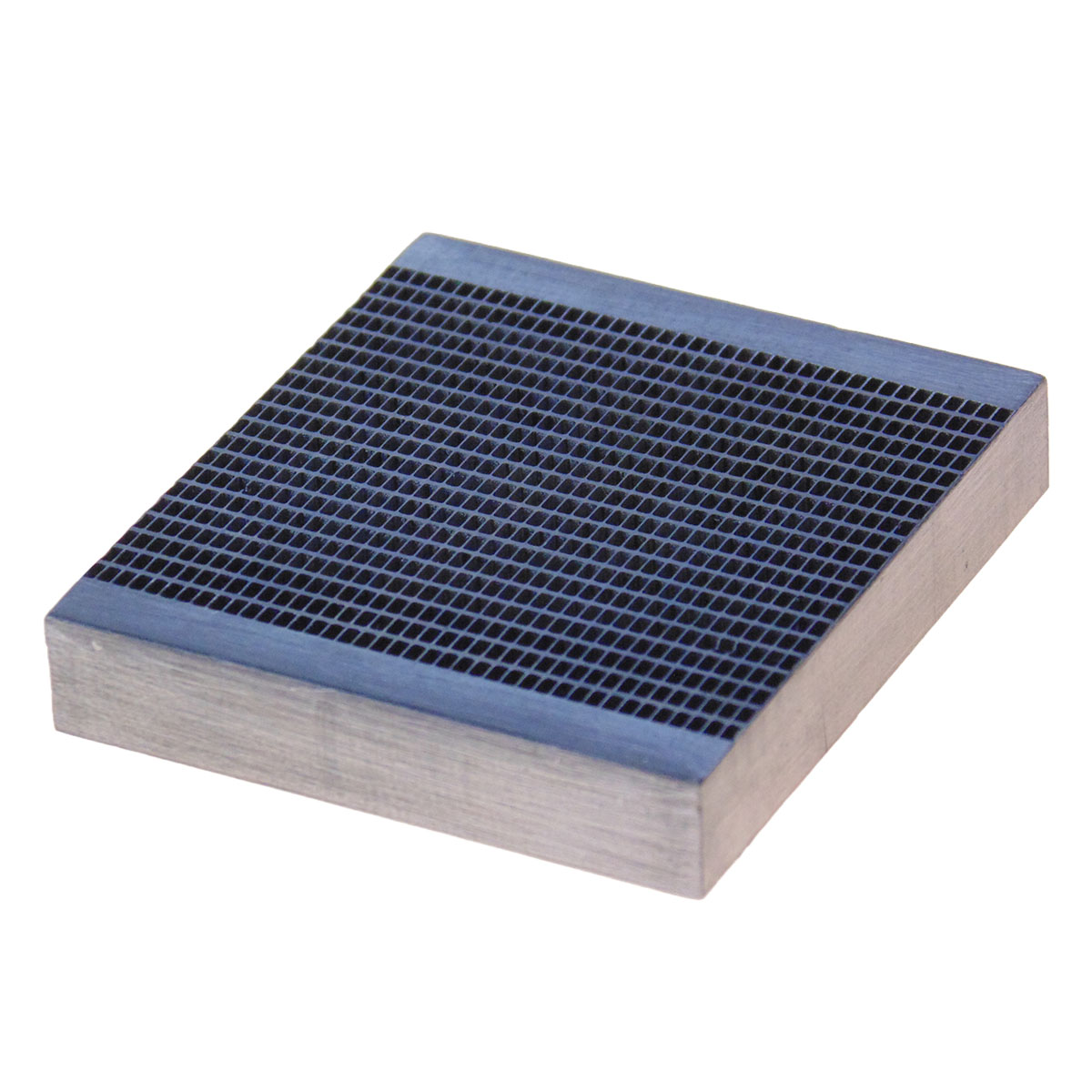
Product description
Anti-scatter grid configurations
Crossed grids can be manufactured with orthogonal (90°) or oblique septa angles. Orthogonal designs are standard for most applications; oblique configurations may offer advantages for specific detector geometries.
| Configuration | Primary Use | Notes |
|---|---|---|
| Orthogonal focused | CBCT, medical thick-body | Septa converge to focal point |
| Orthogonal parallel | Industrial, security | Distance-independent |
| Cellular (honeycomb) | Mammography | Minimum primary attenuation |
Positioning requirements
Crossed grids require more precise alignment than linear grids because tube angulation in any direction causes grid cutoff. The X-ray beam must be perpendicular to the grid surface, and tube tilting for anatomical positioning is not possible.
For applications requiring tube angulation, linear grids oriented appropriately remain the better choice despite their lower scatter rejection efficiency.
CT and CBCT applications
Two-dimensional anti-scatter grids are increasingly used in computed tomography, where they can reduce scatter intensity by factors of 10–20× in projection images. Benefits include:
- Reduced cupping artifacts
- Improved CT number accuracy
- Enhanced soft-tissue contrast
- Better visualization of low-contrast structures
Nuclear Shields manufactures focused 2D grids for cone-beam CT systems with septa aligned toward the X-ray focal spot. Contact our engineering team with your CBCT detector specifications for custom grid design.
Contact usAdditional images
Product attachments
Login to see other downloads, otherwise contact us