Converging / Diverging Collimators
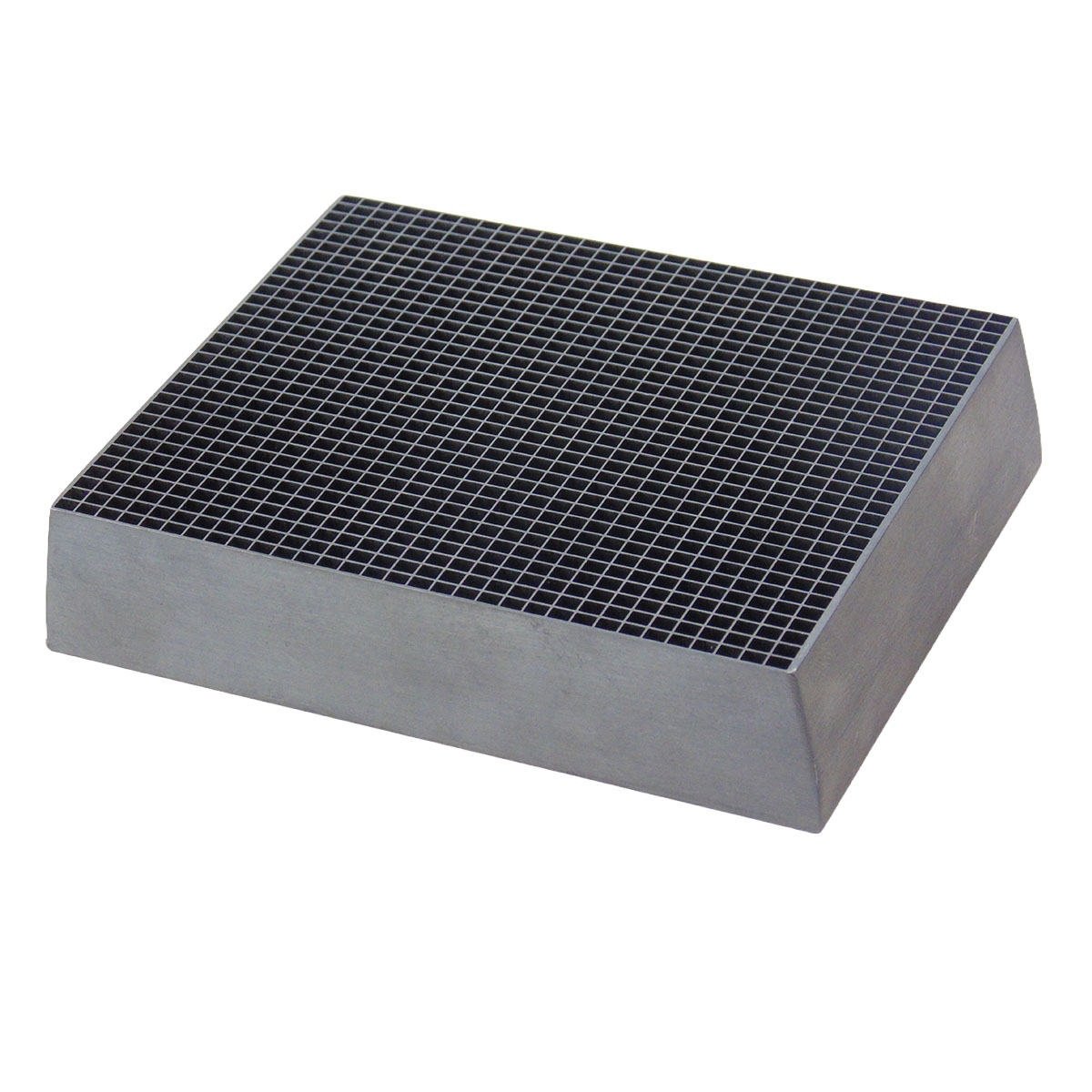
Converging and diverging collimators for specialized gamma camera applications. Magnified imaging of small organs, extended field of view for large detectors. Custom focal lengths available.
Converging and diverging collimators use non-parallel hole geometries that focus or spread the acceptance pattern, providing image magnification or expanded field of view compared to standard parallel hole designs. Nuclear Shields manufactures both converging and diverging collimators for specialized nuclear medicine imaging applications.
Product description
Converging collimator geometry
In a converging collimator, all holes aim toward a common focal point located in front of the collimator face. Gamma photons from a small source region are accepted across a large detector area, producing a magnified image with improved spatial resolution and improved sensitivity compared to parallel hole collimation of the same resolution. The magnification factor depends on the source-to-collimator distance relative to the focal length. Objects closer to the collimator are magnified more than distant objects, and the field of view decreases with distance. This variable magnification can cause image distortion for thick or extended sources but provides excellent imaging of small, well-defined organs.
Diverging collimator geometry
Diverging collimators are geometrically opposite to converging designs. Holes aim toward a focal point behind the collimator, spreading the acceptance pattern outward. This produces image minification, making the projected image smaller than the source, but expands the field of view beyond the physical detector dimensions. Diverging collimators were historically used to image large body regions (such as lungs or abdomen) on small gamma camera detectors. With modern large-format rectangular detectors, this application has largely disappeared. However, diverging geometries remain relevant in specialized configurations and hybrid collimator designs.
Contact usAdditional images
Product attachments
Login to see other downloads, otherwise contact us